Why a Group’s Small Rituals Matter
Why a group’s small rituals matter: clear opening and closing cues help people understand a gathering’s rhythm without requiring everyone to join alike.
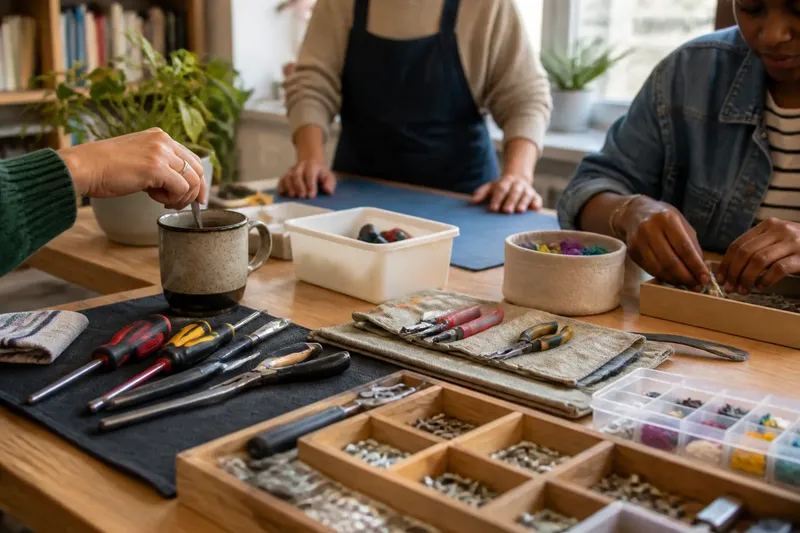
At a neighborhood repair table, a spoon taps the rim of a mug while someone lays out screwdrivers and another person keeps sorting bolts. Why a group’s small rituals matter becomes clear in that ordinary moment: a familiar signal can mark the gathering’s rhythm without deciding how anyone must take part.
Imagine a hypothetical weekly repair circle at a library. People arrive at different times, some ready to talk and others focused on a lamp or a torn backpack. The organizer wants everyone to understand when the shared activity begins and ends, without turning either moment into a performance.
A simple opening cue clarifies when the activity begins
A round of introductions may seem like the obvious way to start, but it can make speaking feel compulsory. Someone arriving late has to interrupt, while a newcomer who would rather observe may have no comfortable answer to a personal question.
Instead, the organizer could tap a mug once, point toward the tools and work mats, and start setting out materials. The sound is brief, and the visible action shows what comes next. A person can join the work, watch from a chair, or arrive after the cue without explaining themselves.
The signal works because it is tied to the activity, not to a required response. If people cannot hear the tap, the organizer can also raise a hand or begin moving the materials. A second, visible cue makes the opening easier to notice.
Small rituals work best when the choices are clear
A recurring gesture should help people read the room, not assign them a role. A group might leave an open chair near the workbench, keep a quiet spot available, and make it plain that visitors may watch before deciding whether to join in.
Say a hypothetical repair circle has a tray of colored clips for marking projects in progress. The organizer places it beside the work mats and explains that anyone may use a clip to show which item they are working on. A visitor clips one beside a lamp; another leaves the tray alone and begins sorting buttons. The expected observable result is that people can identify ongoing work without needing to announce their plans.
Keep the gesture small enough that someone can skip it without attracting attention. A ritual is more useful when it offers a recognizable cue than when it asks the room to display one shared mood.
A closing cue makes the transition easier to read
Without a clear ending, visitors may wonder whether to tidy, keep chatting, or head out. A formal closing round can solve one kind of uncertainty while creating another, especially if everyone is expected to speak.
A practical alternative is to give a quiet warning, then name the next gathering time and point out where shared tools go. The organizer can begin returning materials to labeled bins; anyone who wants to help can join, while others can collect their belongings and leave.
Picture a hypothetical visitor who has repaired a backpack without joining the conversation. When the organizer gives the closing cue, the visitor returns the scissors, nods to a neighbor, and leaves. The observable result is that the visitor can recognize the activity has ended without needing to explain their quieter participation.
Check whether the signals are clear and useful
A group can review its opening and closing rituals by looking at what happens around them. These checks connect a specific observation to a practical choice, rather than asking people to judge whether a ritual feels successful in the abstract.
- If newcomers pause at the doorway after the opening cue, then add a visible sign or have the organizer point out where to begin; if they enter and settle easily, keep the cue simple.
- If late arrivals interrupt to ask whether the activity has started, then repeat the cue in a way they can see or hear; if they can join without confusion, avoid adding another announcement.
- If people look around uncertainly when the gathering is ending, then name the closing cue and show where materials go; if they already leave or tidy comfortably, keep the ending as it is.
- If the same person always has to lead the ritual, then invite another willing member to take a turn or use an easy-to-follow visual cue; if the task is light and shared, no new role is needed.
- If a ritual depends on hearing a sound, then pair it with a visible action such as raising a hand or moving supplies; if the cue is already accessible to those present, retain it.
- If an object used in the ritual starts to block the work area or confuse its purpose, then move it or explain its use; if people use it as intended without disruption, leave it in place.
Ask about one specific moment, such as “Was it clear when we were ready to begin?” That gives people a concrete point to respond to, and the group can change one detail rather than redesigning the whole gathering.
What do people ask about small group rituals?
What counts as a small group ritual?
It can be a repeated greeting, a sound that marks the start, a shared way to arrange materials, or a familiar closing cue. Its practical value is that people can recognize what is happening without being asked to respond in one particular way.
Do rituals need everyone to participate?
No. People can notice a cue, help with a task, watch, or simply carry on with what they are doing. If the ritual requires everyone to speak or handle an object, the group can choose a less demanding signal.
How can a group tell if a ritual is confusing?
Look for concrete signs, such as newcomers hesitating, late arrivals interrupting, or people lingering because they do not know the gathering has ended. Ask about that particular moment and adjust the cue if it would make the next gathering easier to follow.
Should a group keep the same ritual each time?
Keep a cue consistent when it helps people recognize the gathering, but change details that cause confusion or get in the way. A familiar opening can remain even if the materials or room arrangement change.
Let the ritual serve the gathering
In a hypothetical repair circle, a mug tap, a visible start to laying out tools, and a plain closing signal can give the evening a recognizable shape. They do not determine who talks, what someone works on, or how much company they want.
To decide whether a ritual belongs, notice the moment that most needs a clearer cue and choose a gesture that fits the activity. Keep an alternative available for anyone who misses or cannot use that signal, and revisit the choice if the room’s needs change. Why a group’s small rituals matter is not that they produce one kind of togetherness, but that they make shared time easier to understand and enter.