The Helpful Host Myth: Why Welcome Takes More Than One Person
Shared welcome helps a group feel easier to join: make first-visit details, customs, and next steps clear without relying on one person.
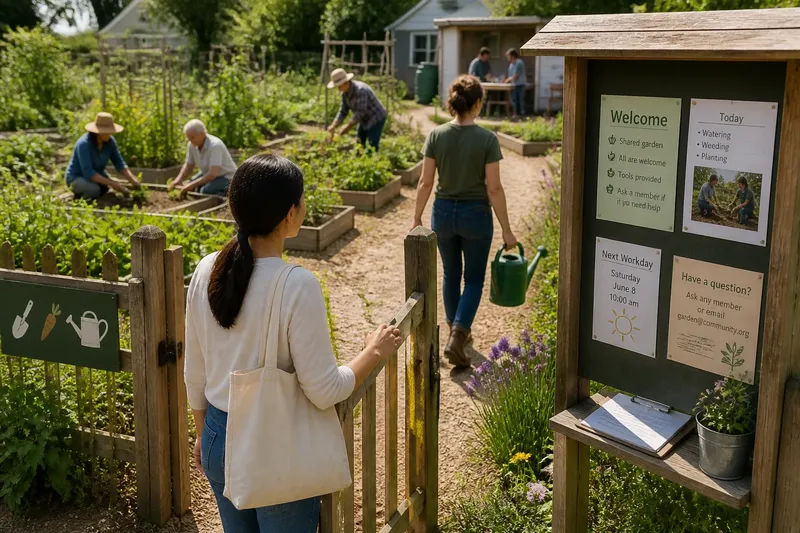
At a neighborhood garden, a newcomer reaches the gate while the volunteer who usually explains the beds is inside carrying a watering can. The visitor can see people working, but not whether to step in or wait. A welcoming group needs more than a friendly face; it needs a clear way for someone to understand the activity and find a place in it.
That is the useful shift behind the helpful host myth: stop treating welcome as a performance at the door and make the group’s practices understandable. The goal is not to make every member a greeter. It is to remove the small mysteries that leave a new person guessing.
Make the activity legible before anyone arrives
People often decide whether they can attend based on practical details. A message that names the entrance, the room, what the group will do, and whether supplies are provided lets someone plan without asking a stranger for basic information.
Use descriptions that make sense to a first-time visitor. “Meet in the east room beside the library’s children’s area; paper and markers are provided” is clearer than “same room as usual.” If the activity involves movement, shared tools, or a noisy space, say so plainly and mention any alternatives the group can offer.
Imagine a neighborhood repair circle whose invitation says only “Bring a project.” The organizer revises it to say that visitors may bring a small household item, watch without bringing anything, or ask about the next session by email. A newcomer can now choose a realistic way to attend before deciding whether to go.
Check the invitation from the perspective of someone who has never been there.
Make group customs visible instead of testing newcomers
Every group has routines that regulars may not notice anymore: where to put belongings, how turns work, whether people introduce themselves, or who may use shared materials. When those expectations remain unspoken, a visitor has to guess which actions are welcome.
Explain a custom at the moment it matters, and distinguish a preference from a requirement. “We usually put finished pieces on this shelf, but you can take yours home” gives someone both the routine and a choice. If a sign-up or safety instruction is genuinely necessary, say what to do and whom to ask about a concern.
For a simple review, check each detail and decide what to change:
- Observe whether the entrance is obvious from the sidewalk; if it is not, add a landmark and directions, or arrange a clear sign at the entrance.
- Observe whether an invitation names the room and activity; if either is missing, add it, or provide a contact method for visitors who need clarification.
- Observe whether newcomers can tell what supplies are available; if not, list what the group provides, or say what is optional to bring.
- Observe whether a routine is explained before someone must follow it; if not, add a brief prompt at that point, or assign a member to explain it when questions arise.
- Observe whether people can ask a question without interrupting the main activity; if they cannot, name a person or quiet moment for questions, or offer a written contact route.
- Observe whether the next meeting and its location are easy to find; if they are not, share them before people leave, or point to a reliable public notice.
Clear customs let people decide how to participate without having to decode the group first.
Let participation take more than one form
A group can unintentionally reward only the people who speak quickly, volunteer first, and stay until the last chair is put away. Listening, writing down an idea, helping with a quiet task, or leaving at the announced end time can also be meaningful participation.
Offer options without asking anyone to explain a private need. At a neighborhood planning meeting, for instance, someone might speak during discussion, leave a written suggestion, or listen and follow up later. For a shared workday, the choices might include sorting materials, welcoming arrivals, or taking a shorter shift.
Say, “You’re welcome to join the conversation, write an idea on this board, or just listen today.” That sentence makes the options visible while leaving the decision with the visitor.
Give newcomers a route into the work
Belonging grows when people can see how to contribute, not only where to sit. A group can make that route easier by naming tasks, explaining who coordinates them, and showing how someone can try a small role without making a long-term commitment.
Say you coordinate a community meal and a visitor asks how to help. You point out three real options: arrange napkins before the meal, help label dishes, or simply observe this time; you explain which tasks need a quick check with the kitchen lead. The visitor chooses labeling, completes that task, and knows whom to ask if they want to help again. The result is a specific first contribution, not an assumption that the newcomer must take on a larger role.
Small, clearly bounded tasks can make the group’s shared life easier to understand.
Questions people ask about the helpful host myth?
What should a group explain before a first visit?
Share where to go, what will happen, what materials are available, and how to ask a question. Mention any expectations that affect participation, while separating necessary requirements from optional customs.
How can newcomers join without speaking in a group?
Offer another route, such as writing a suggestion, helping with a quiet task, or listening before joining a discussion. Make the option clear without requiring the person to explain why they prefer it.
What can a group do when no one is free to greet visitors?
Make arrival directions and the activity plan easy to find, and give regular members enough shared context to answer basic questions. A visible sign, clear message, or named point of contact can help someone proceed without waiting for a particular person.
How should a group follow up after a first visit?
Tell visitors where the next meeting will be announced and offer a contact route if they have questions. Ask permission before sending personal messages or adding someone to a mailing list.
Keep the next visit easy to choose
A first visit may be interesting without making someone ready to return immediately. Close with useful details: when the group meets again, where updates appear, and whether visitors need to register or bring anything.
In the garden, a member could point to a noticeboard with the next workday and explain that tools are shared. The visitor leaves knowing how to come back, but nobody assumes they have promised to do so. That balance is the point of a shared welcome: give people enough information to choose their next move, and let them make it in their own time.
The helpful host myth becomes less persuasive when a group treats clarity, shared knowledge, and an open route into the work as ordinary parts of how it meets.